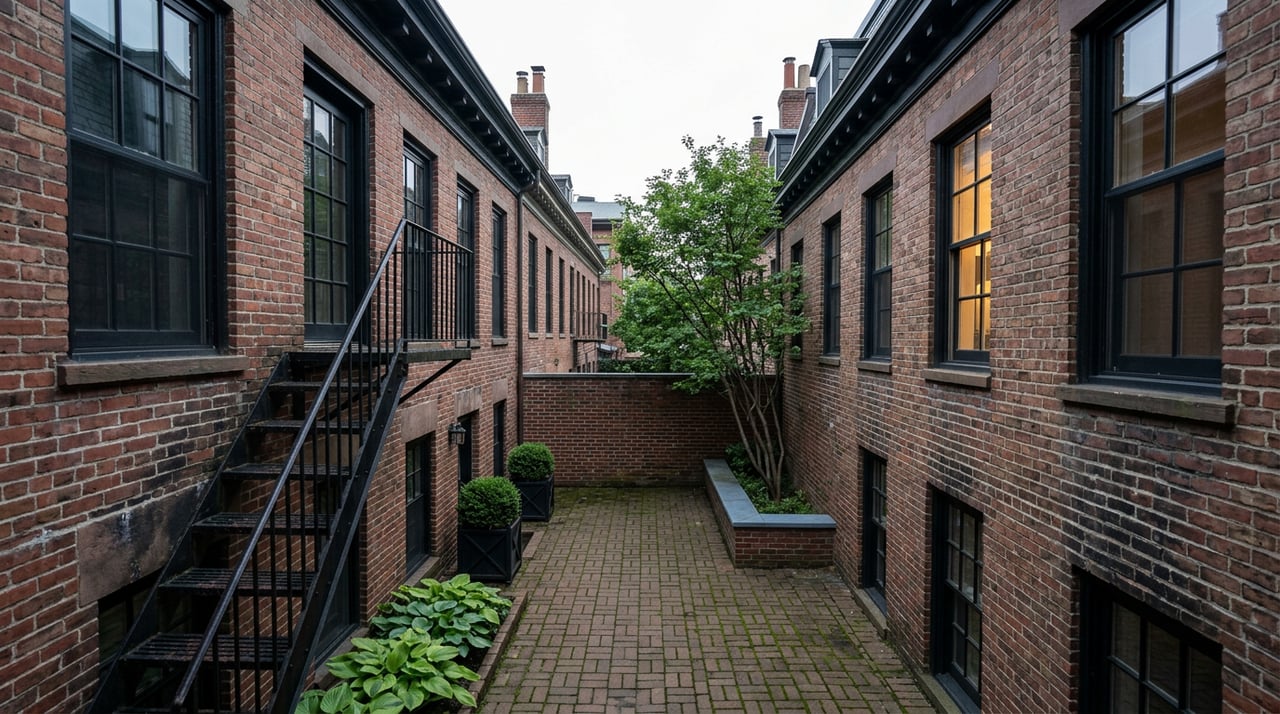
Saint Anthony's Feast ended Sunday night. The statue went back inside, the ribbons of pinned donations came down, and Endicott Street woke up Monday morning looking like a street again instead of a ten-hour procession route. If you live here, you already know what that means: feast season is over.
Except it isn't. Not quite.
There's one more event on the calendar, and it's the one nobody outside the neighborhood seems to know exists. It has no vendors, no stage, no sponsor list, and depending on which local tracker you check, no confirmed date either. That gap in the record is itself worth paying attention to, because it tells you something about how this neighborhood actually works that six weeks of tourist-facing feast coverage never will.
Six Feasts, Five Weeks, and Then a Seventh Nobody Advertises
The run started in late July with the Feast of Saint Joseph and didn't let up until the end of August: Saint Agrippina di Mineo, Madonna della Cava, the 116th Fisherman's Feast with its Flight of the Angel finale, the San Gennaro Feast at Paul Revere Mall on August 21 through 23, and finally the 107th Saint Anthony's Feast, closing Sunday, August 30, with the ten-hour Grand Procession that started at 11:30 a.m. at the outdoor chapel on Endicott Street. Every one of those has a website, a schedule, a sponsor, or all three. The Saint Anthony's Feast organization runs an annual golf tournament to fund North End nonprofits. The San Gennaro Feast posts a set list. These are civic institutions with budgets and reasons to be found.
Then there's Santa Rosalia di Palermo.
It's a procession, not a feast, which in North End terms is a meaningful distinction. No food vendors. No live bands. No stage on Endicott or Hanover. Just a walk around North Square starting at 1 p.m., organized by a society small enough that its only public listing is a Facebook page. Local event trackers place it in September, but they disagree on the day. One neighborhood aggregator lists it as "TBD." A statewide Italian heritage directory pins it to September 5. Neither has updated to correct the other, which is itself the tell: this isn't an event built for outside coverage. It's built for the people who already know where North Square is and don't need a website to find out.
That's the actual closing bell on feast season, not Saint Anthony's. The big feast gets the headline because it has the infrastructure to make headlines. The small one gets to be the real ending precisely because it doesn't.
The Neighborhood Already Rehearsed This Quiet Once
If you want proof that the North End's quiet moments arrive on their own schedule and not the tourist calendar's, look at what happened to the music. NEMPAC's Jazz in the Park ran Thursday evenings on the North End parcels of the Rose Kennedy Greenway from July 9 through August 6, then stopped, a full three weeks before the feast season even hit its loudest stretch. The genuinely local programming, the kind that skews toward neighbors with folding chairs rather than visitors with phones out, wrapped before Fisherman's Feast, before San Gennaro, before Saint Anthony's ever closed a street.
That timing matters for anyone trying to read this neighborhood correctly. The feasts get treated as the story of a North End summer because they're loud and photogenic and easy to write a calendar around. But the quieter civic pleasures, the Thursday jazz, the ordinary rhythm of a weeknight, don't wait for Labor Day to reassert themselves. They come and go all season, often in the gaps between the big weekends that outsiders assume are wall-to-wall festival.
What Regulars Actually Do With the Week After
Ask a longtime resident what changes in early September and the answer usually isn't about the feasts ending. It's about Haymarket.
The open-air market on Blackstone, Hanover, and North Streets runs every Friday and Saturday, year-round, roughly 50 vendors selling fruit, vegetables, and seafood at prices well under retail. It's been doing this in some form since 1820, formally organized as the Haymarket Pushcart Association in 1974 to negotiate directly with the city on things like trash removal and truck parking. During feast weekends, Haymarket becomes scenery, something visitors photograph on their way to Hanover Street. The week after Saint Anthony's, it goes back to being what it always was for the people who actually shop there: a Friday and Saturday errand, not a backdrop.
The same shift happens at the sit-down tables. During the peak feast weekends, walk-ins pile up and the Hanover Street rooms take a beating from foot traffic that has nothing to do with dinner reservations. Once the last procession clears, a resident who wants an actual table on a Tuesday night can usually just show up and get one. That's not a small thing in a neighborhood where the best-known restaurants book out weeks in advance even in a quiet month.
The New Rooms Get Their First Honest Test
This is also the moment when the neighborhood's newer additions stop competing with a saint's calendar for attention.
Umami Crudo opened at 78 Salem Street in December 2025, a more casual sibling to Chef Gary Lei's Umami Omakase in Cambridge, built around a mostly à la carte menu of Hokkaido scallops and a lobster tempura roll, with four omakase options for anyone who wants to stay longer. It spent its first eight months of existence competing for foot traffic with a summer that had six separate weekends of street festivals happening within a few blocks. September is the first stretch where it gets to be judged on its own terms, on a Tuesday, without a parade route running past its door.
AquaPazza, the longtime North End Italian restaurant and oyster bar, added a daytime grab-and-go pasta window called Presto Pasta earlier this year at 135 Richmond Street, letting customers choose their pasta shape, sauce, and add-ons and watch it assembled on the spot. Sunny Girl, the deli-style breakfast counter from Jesse Rosen and Peter Fiumara near the waterfront, is keeping its original North End location even as it expands into South Boston, which says something about how confident the owners are that the neighborhood itself, not just feast season traffic, can sustain it. And Little Sage, the revival of a North End mainstay that closed in 2009, reopened this year in a fifty-seat room under original chef Tony Susi, serving scratch-made pasta like ricotta gnocchi with Maine lobster.
None of these places built their business model around feast weekends. But all of them spent their opening months operating inside one anyway, which makes September the first real read on whether they can hold a room on an ordinary night. That's a more honest test than anything a July write-up could offer, because a full house during Saint Anthony's weekend tells you about foot traffic, not about a restaurant.
The Neighborhood Nobody Photographs
The version of the North End that shows up in feast coverage, ten-hour processions, hundred-vendor pushcart lineups, a saint carried through the streets for a full day, is real. It's also only the loudest three months of a neighborhood that spends the other nine operating at a completely different volume. The residents who actually live here know the difference between the North End that gets photographed and the one that gets lived in on a Tuesday morning at Haymarket or a Wednesday dinner at a table that didn't require a three-week wait.
Santa Rosalia's procession, whenever it lands this year, won't make anyone's must-see list. That's exactly why it's worth knowing about. It's the neighborhood closing its own book on its own terms, with no press release and no confirmed date, which is a more accurate signal of what the North End actually is than anything with a sponsor logo on it.
If you're paying close enough attention to a place to notice when a feast calendar quietly hands the neighborhood back to the people who live in it, that kind of attention is worth something when it's time to talk about a home here too. Georgia Balafas has been reading the North End at that level of detail for years, past the festival calendar and into the blocks that don't make anyone's list. If you're curious what a specific address on Salem, Prince, or North Square is actually worth in today's market, reach out anytime for a straightforward valuation.